
UX/UI · Mobile app · Master's final project
Orris — Keeping flatmates' agreements visible
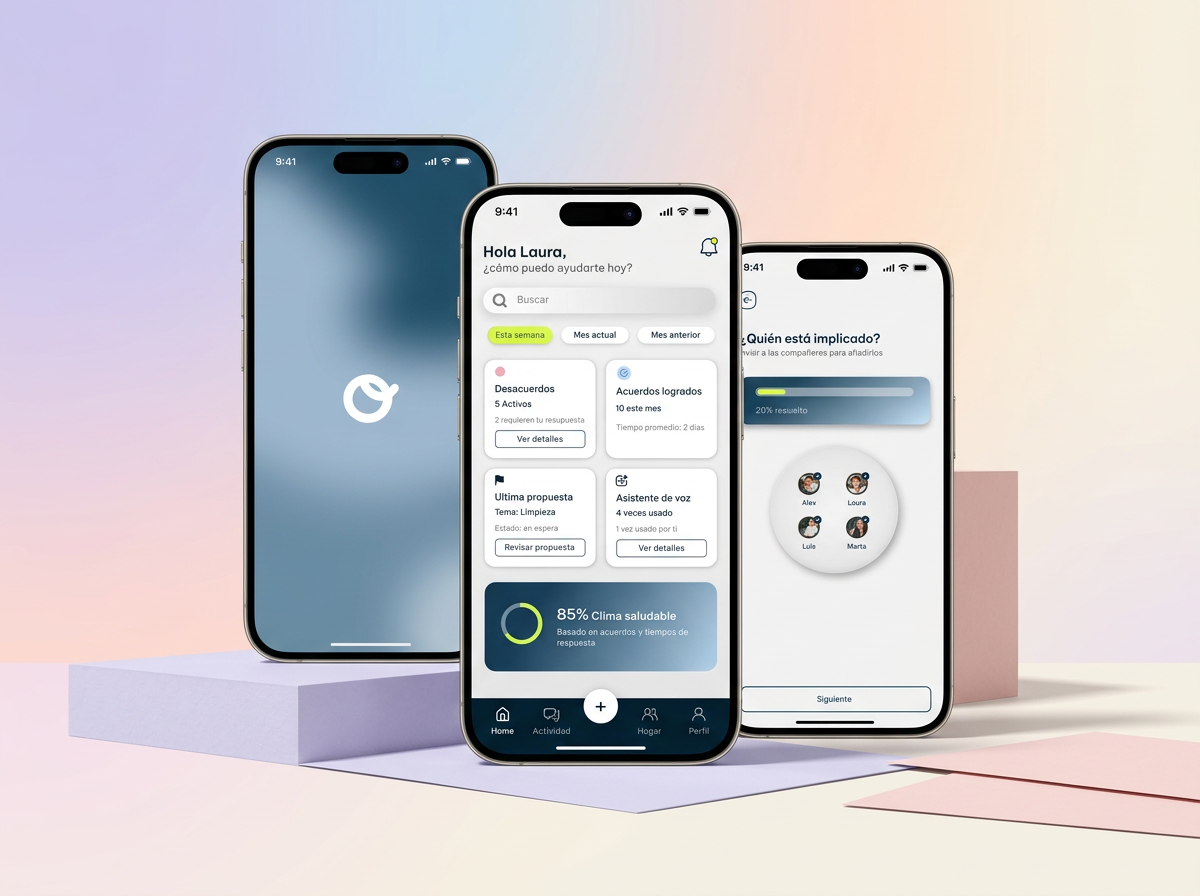
A mobile app that helps flatmates resolve disagreements together and keeps every agreement visible.
Role
UX/UI designer in a team of 7
Context
Master's project — Nuclio Digital School
Year
Demo Day, 24 March 2026
Tools
Figma, FigJam, Optimal (tree testing)
What I designed
Conflict historyVoice mode user flowGroup resolution with assistant — contributorProblem and evidence
Flatmates use Tricount for costs and WhatsApp to talk, but neither helps them resolve a disagreement. Most agreements stay verbal, then get forgotten.
Poor coordination
Nobody is sure who does what.
Invisible agreements
What was agreed is forgotten.
Unclear communication
Small issues become misunderstandings and strain.
The opportunity was not another task manager, but one shared path: raise the issue, agree together, keep the outcome.
interviews
survey responses
Said
An agreement is made verbally.
Forgotten
There is no shared record.
Strain
Different memories create conflict.
The solution
Orris gives flatmates one shared path for a disagreement: describe it, resolve it as a group, and keep the agreed outcome where everyone can find it.
Describe
One flatmate raises the issue — by voice or text — and tags who it involves.
→Resolve
The assistant lays out the options; flatmates compare them and vote, so the group decides — no one else.
→Remember
The agreed solution, its status, and who was involved stay in the conflict history.
One end-to-end flow
From describing the problem to an agreement everyone can find later.
Describe
Orris
“Tell me what happened.”
Speak or type
Pick who is involved and review the words before sending.
Choose
Laura
“Let's send a proposal.”
Pick a path
Resolve it now or send a proposal to the group.
Vote
Orris
“3 of 4 have voted.”
Everyone chooses
The disagreement stays open until everyone agrees.
Close
Orris
“Agreement reached.”
Apply the solution
The agreed proposal becomes the shared outcome.
Review
Find it in history
Its status and solution remain visible to the flat.
How we approached it
Research before features
8 interviews, 43 survey responses, benchmark research, and desk research shifted the concept away from task management.
Voting, not mediation
A mediator decides for the group. Orris keeps the decision with the flatmates: everyone votes, while the assistant only facilitates.
Navigation tested with tree testing
Two sitemaps compared with Optimal; the chosen one reduced errors and search time.
What users told us
We tested the prototype with 2 people. The sample was useful for finding comprehension problems, not measuring success.
What we observed
Unclear language
Individual/group and “escalate” were not understood.
Voting dead-end
They only saw “Pause” and didn't know how to continue.
Buried history
Past conflicts were hard to find; pending issues need priority over resolved ones.
Best received
Creating a disagreement felt easy; voice was the most interesting way to ask for help.
What I take from it
Make the next step obvious
A group decision cannot leave anyone at a dead end.
Prioritise pending issues
Active disagreements matter more than resolved ones in the history.
Use plain language
Product wording matters as much as its structure.
Takeaway
In group decisions, the next step must be obvious; history should prioritise what is pending; and product language matters as much as structure.
Inside the app
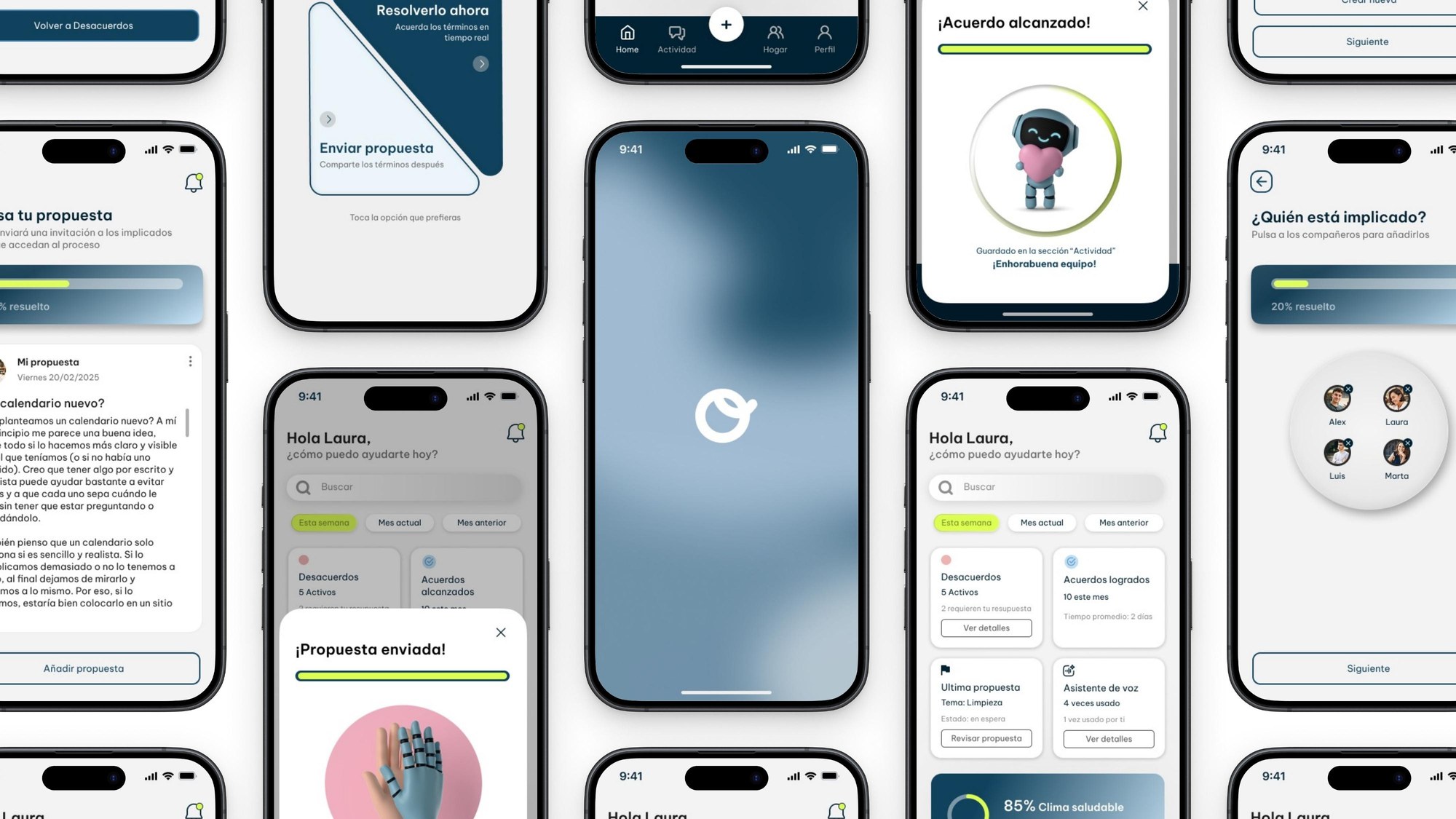
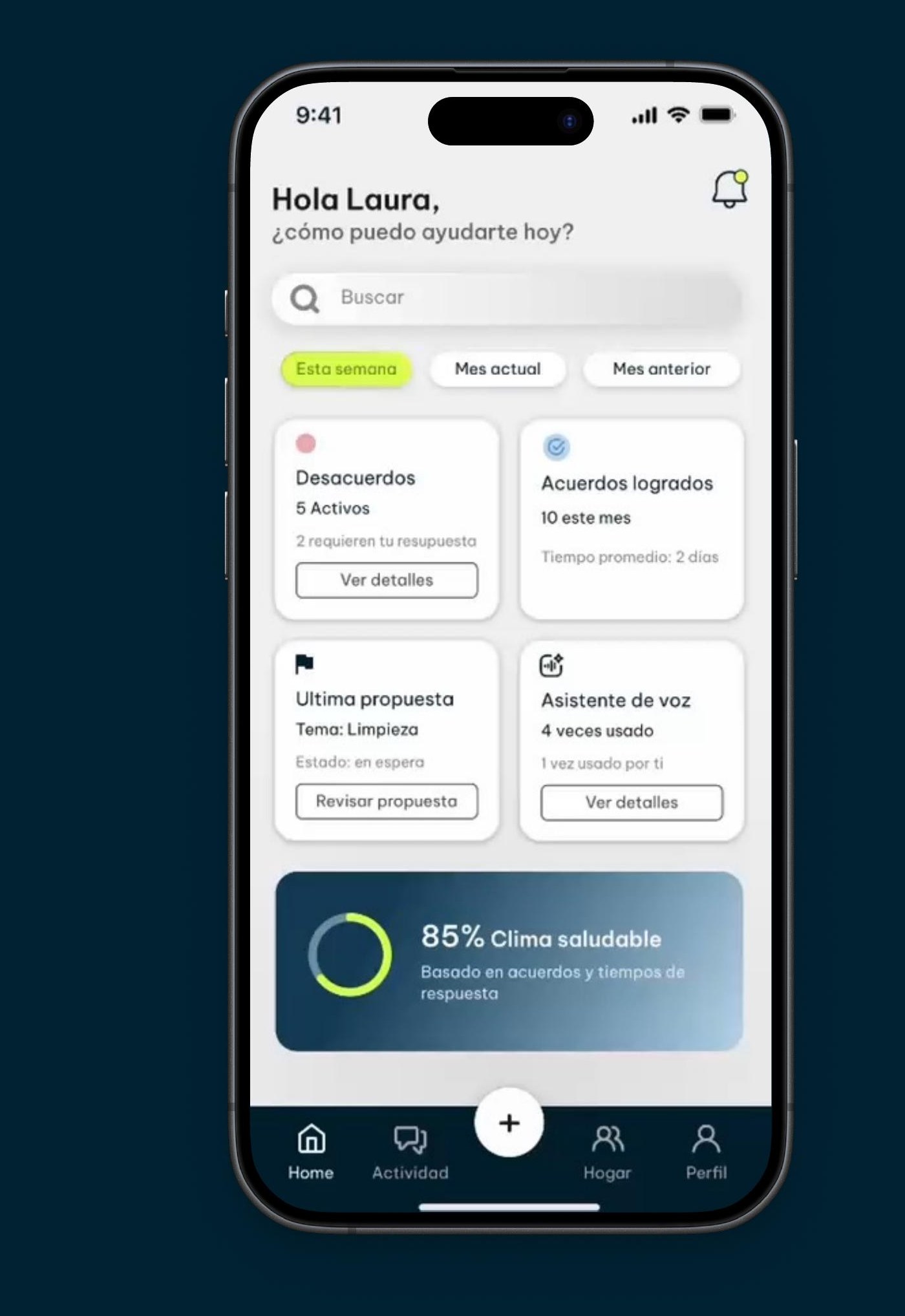
A selection of the screens designed for the Figma prototype, presented at Demo Day — from the first launch of the app to the home dashboard Laura opens every day.
Brand identity
The name comes from Iris, the Greek goddess who carried messages between worlds that couldn't otherwise understand each other — the same role we wanted the product to play: helping people say what they need without putting up walls.
We built a visual identity to match that purpose: Be Vietnam Pro, a neo-grotesque sans serif chosen for clarity and warmth, paired with a dark navy base, a lime green accent, and neutral supporting tones — designed to feel calm around a topic that tends to run hot.
My contribution
I designed the conflict history and voice-mode flow, contributed to the group-resolution flow, and helped shape the Demo Day story.