
Conversational AI · Retail experience · Master's thesis
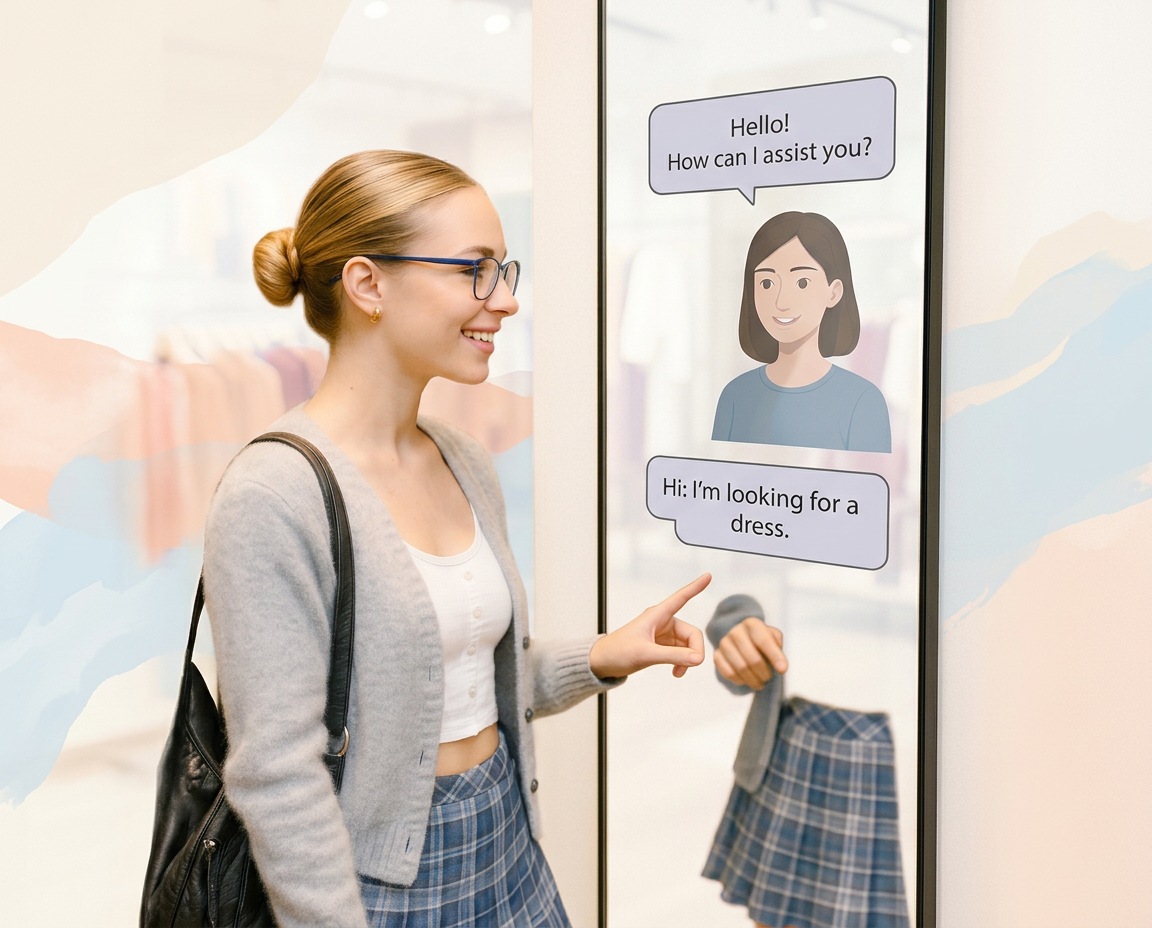
Conversational avatar for Bershka stores
A full-body conversational AI avatar for Bershka stores, designed to reduce operational friction for staff and give Gen Z customers a consistent, personalised in-store experience.
Role
Research, strategy, and solution design (individual project)
Context
Master's thesis — Master's Degree in Innovation and Customer Experience, UNIR
Year
2024
Disciplines
UX research, conversational design, product strategy
Problem and evidence
Gen Z customers bring the speed and continuity of online shopping into stores, but locating products, accessing fitting rooms, and getting timely help still depend on overloaded staff.
Review analysis
TrustPilot complaints repeatedly mentioned fitting-room waits, unanswered requests, and difficult order collection.
Field observation
Five visits across two stores showed staff handling item location, sizing, queues, and collection at the same time.
The issue was operational overload, not unwilling staff. The opportunity was to resolve repetitive requests without removing human support.

Proposed system
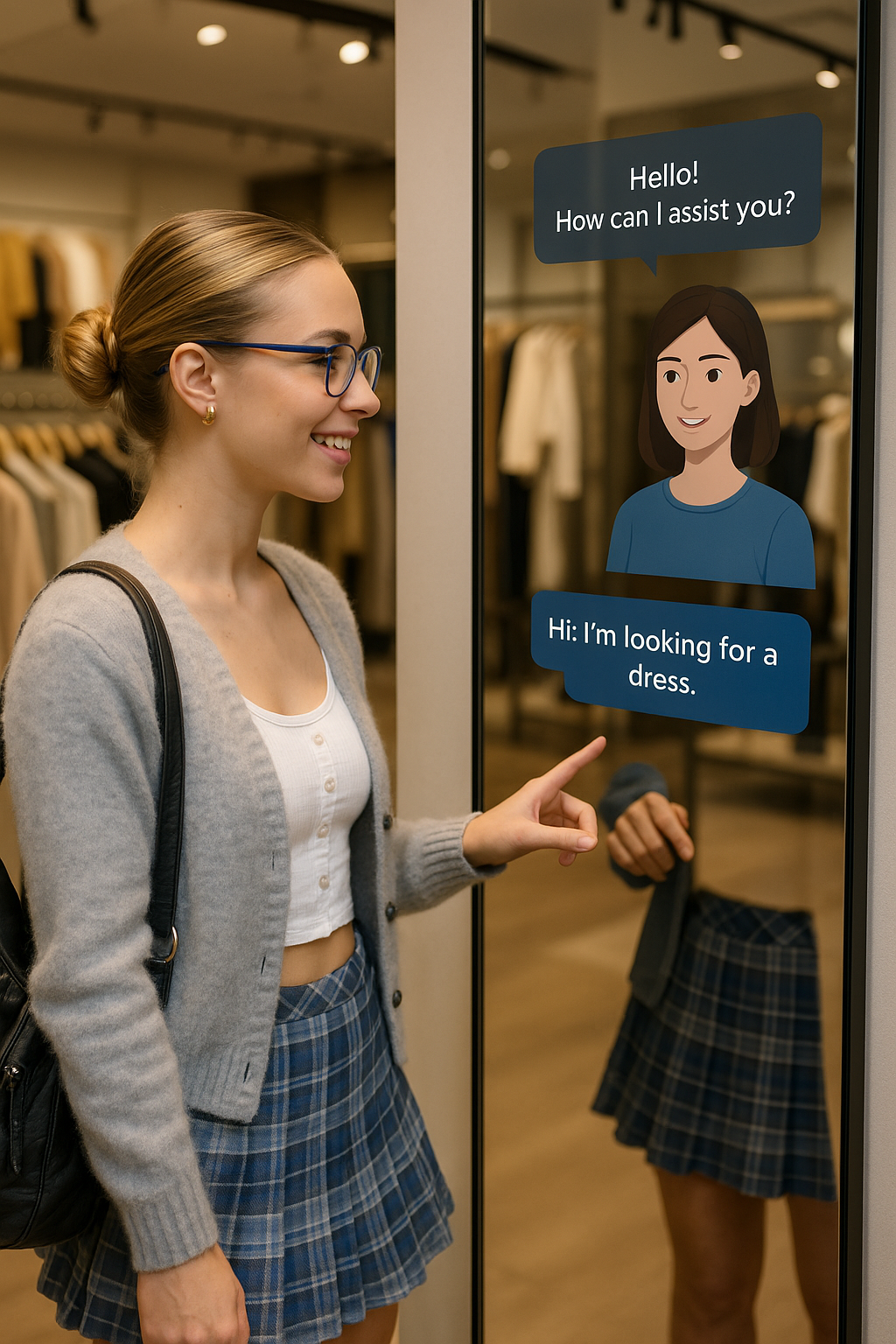
A full-body conversational avatar on in-store mirrors and kiosks, connected to the Bershka app and website so customers can continue the same interaction across channels.
Touchpoints
Interactive mirror or kiosk · Mobile app · Website
→Conversation layer
One consistent persona interprets requests, manages context, and returns the right next action.
→Connected services
Real-time inventory · Store map · Fitting-room queue · Customer preferences
The customer experience
Laura's Saturday visit, in six steps:
Walk up & tap
Avatar
“Hi! How can I help you today?”
She taps the screen to start
Just a tap on the mirror.
Recognise
Avatar
“I see you usually wear a size M.”
Knows her — only via the app
With the Bershka app linked, it knows her size; otherwise it simply answers.
Ask
Laura
“I need something for a daytime wedding.”
In her own words
No menus, no categories.
See
Instant results
AR try-on on the mirror; answers on the spot.
Handoff
A person takes over
The context travels with her.
Rate
One-question check
Her answer says if it works.
Find an item
Scan its QR code and see the exact in-store location.
Manage the fitting room
Reserve a turn, receive a notification, or use virtual try-on.
Get relevant suggestions
Receive recommendations based on consented history and preferences.
Key design decisions
Design for trust
A defined personality, gestures, and Bershka-appropriate language make the agent feel intentional rather than like a chatbot placed on a screen.
Prioritise evidenced needs
The first release focuses on item location, fitting-room flow, and recommendations because each maps directly to observed friction.
Keep context across channels
The same behaviour and information architecture span store, app, and web; personalisation only works with clear consent and reliable identity.
How I would validate this project
This was an innovation proposal, not a live deployment. Here is how I would validate it in a limited-store pilot before any wider rollout:
Limited-store pilot
Run the avatar in one or two stores and compare service levels against the current baseline.
Operational measures
Track fitting-room wait times and how many of the most common requests the avatar resolves without staff.
Staff feedback
Interview staff throughout the pilot on workload, accuracy, and where the avatar helps or falls short.
Customer signals
Collect satisfaction surveys, store ratings, and social mentions of the experience.
Constraints to design for
Privacy
Minors, consent, and GDPR limit how identity and preference data can be used.
Identity
Cross-channel personalisation needs a clear, consistent sign-in model.
Infrastructure
Inventory, queues, profiles, and store systems need secure real-time integration.
Takeaway
Start with observed friction, then choose the technology: conversational AI is valuable here because it unifies disconnected store services through one natural-language interaction.